Nitrogen Quality Report
Booster
pump room
Executive Summary
The purpose of this
report is to convey the results of two weeks of monitoring the incoming
nitrogen gas for booster compressors located in the combined puff area. The
report will show the minimum, maximum, average, and standard deviation for the
following values: dew point, gas temperature, ambient temperature and pressure.
1:
Introduction
An
Engineer requested that the quality of the incoming nitrogen for the booster
compressors be monitored for a period of two weeks at one
hour intervals. The data collection device used has the capabilities to
take a reading every 3 seconds, so that is the sample interval that was
used. Egnergy performed the
monitoring through a sub-contract with CEMSA. Egnergy is an energy optimization
and engineering company located in San Antonio, TX. The owner of Egnergy, Shane
Egner, is the person responsible for providing the analysis. Shane’s
qualifications can be found in figures 1 and 2.
2:
Methodology
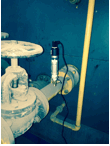
Dew Point Meter:
The nitrogen pressure dew
point was monitored using a Shaw model SDT Dewpoint Transmitter installed at
the inlet of booster pump DX2 (S/N CPP900073). The dewpoint transmitter was
calibrated March 27 2014. The calibration certificate can be seen in figure 3.
The dew point transmitter was installed in the system using a sample cell with
a flow rate of 3-5 CFM. The range of the dew point meter is from -100° C to 0° C with corresponding meter output from 4 – 20
mA. The dewpoint transmitter was connected to the data logger using a 12 VDC
power supply in a powered loop configuration. Dew Point is recorded every 3
seconds in units of °C.
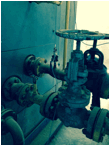
Pressure Transducer:
The nitrogen
pressure was measured using an Ashcroft Pressure transducer part number
G27M0205F2200#G-#4177 installed in at the inlet of booster pump DX1 (S/N
CPP900074. The data sheet for the pressure transducer can be found in figure 4.
The pressure transducer has a range of 0 – 200 PSIG (0 – 14.6 KG/CM2)
with a corresponding meter output from 0 – 5 VDC. The pressure transducer
is connected to the logger using a 12 VDC power supply for excitation voltage.
Pressure is recorded every 3 seconds in units of KG/CM2.
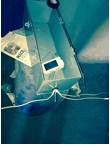 Ambient Temperature:
Ambient
temperature of the compressor room was measured using a TMC20-HD air/water
temperature sensor. The sensor monitored the temperature of the ambient air in
°C and was recorded every 3 seconds. The temperature sensor is a plug and play
model for the data logger. Data sheets for the TMC20-HD can be found in figure
5.
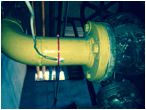
Gas Temperature:
The
temperature of the nitrogen gas was measured using a TMC6-HE flat tip
temperature sensor for mounting on pipe. The sensor monitored the temperature
of the gas in °C and was recorded every 3 seconds. The temperature sensor is a
plug and play model for the data logger. Data sheets for the TMC6-HE can be
found in figure 6.
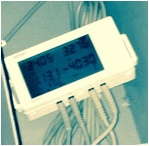
Data Logger:
The
measurements for temperature, pressure, and dew point were recorded every 3 seconds
using an Onset UX120-006M S/N 10503509. The data is read and graphed through
Onset’s software called HOBOware. A free trial
version of the software can be downloaded here: http://www.onsetcomp.com/products/software/bhw-pro-dld. This free
trial can be used to look at the raw data file included with the electronic
version of this report.
3: Results
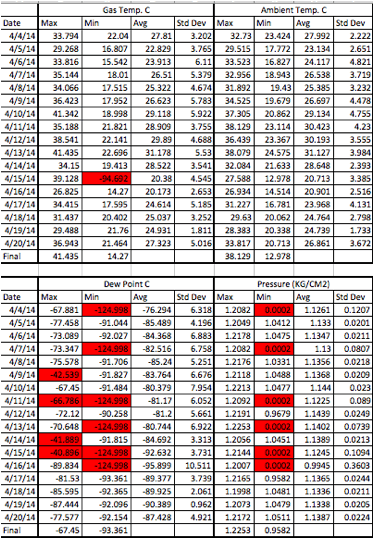
** Numbers in red were not calculated in maximum and
minimum values due to sensor power loss
4: Discussion
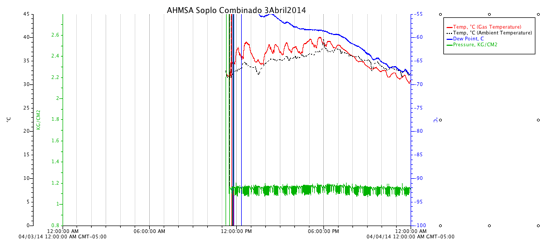
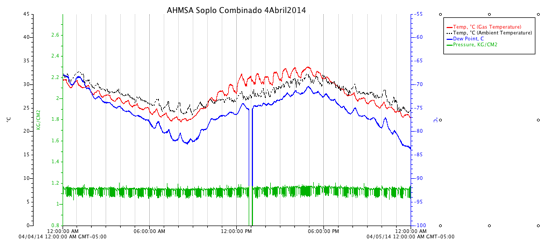
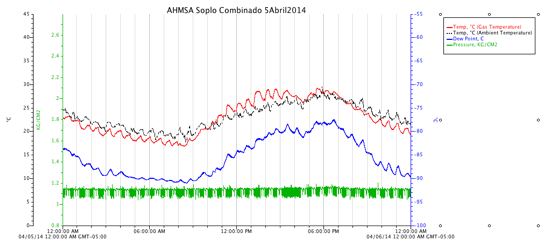
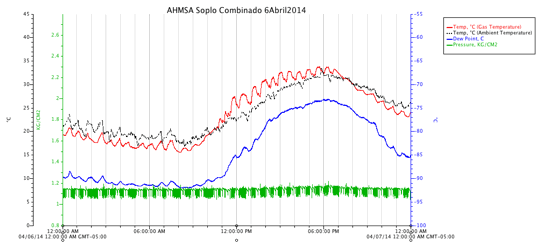
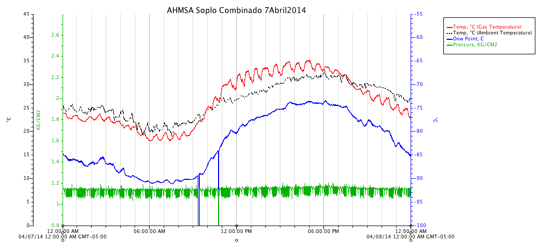
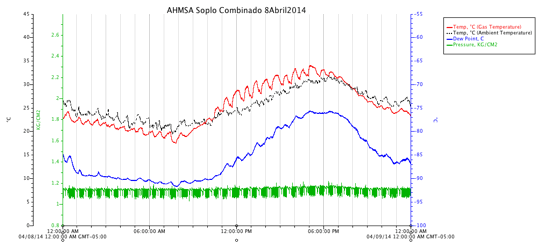
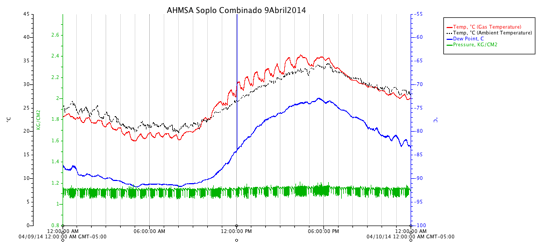
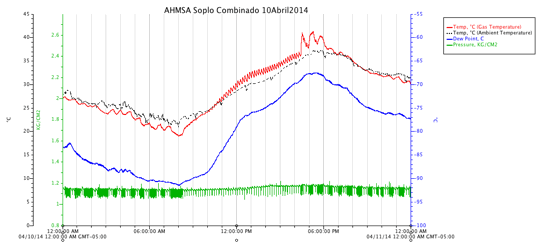
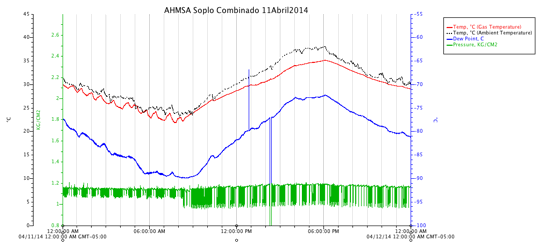
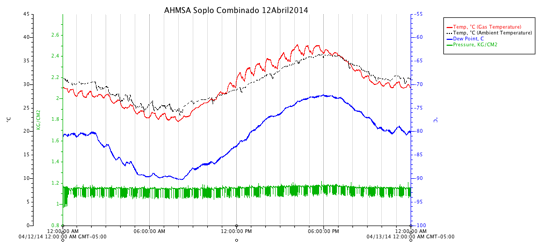
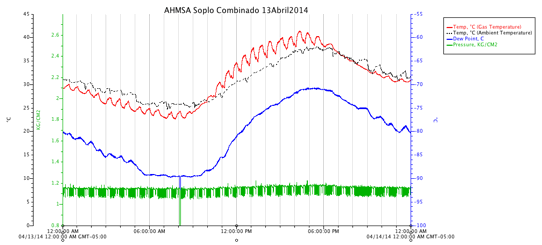
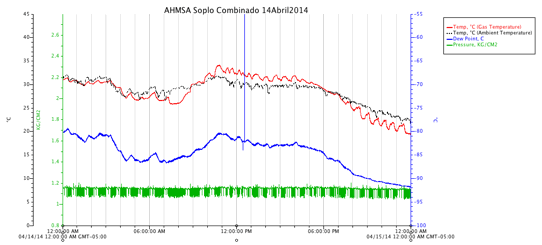
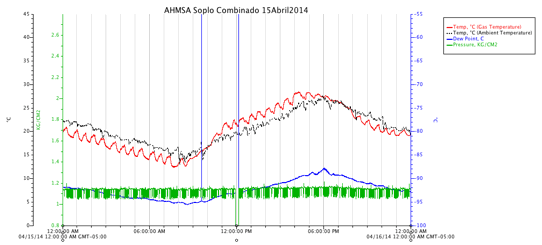
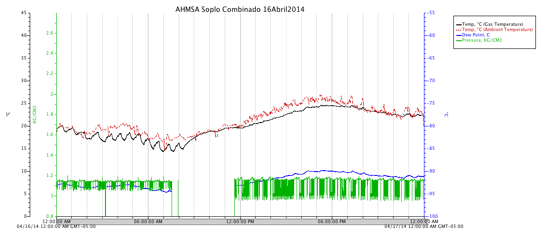
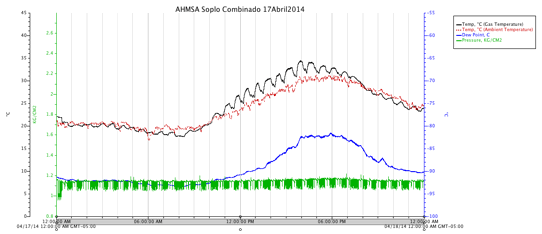
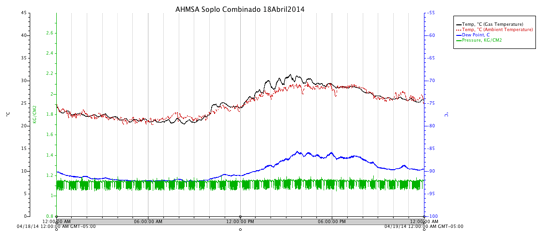
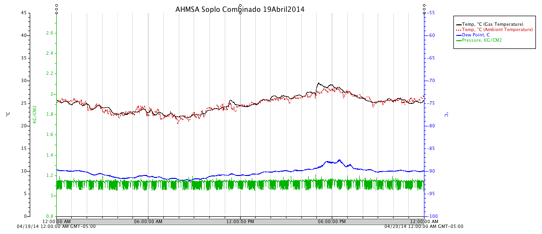
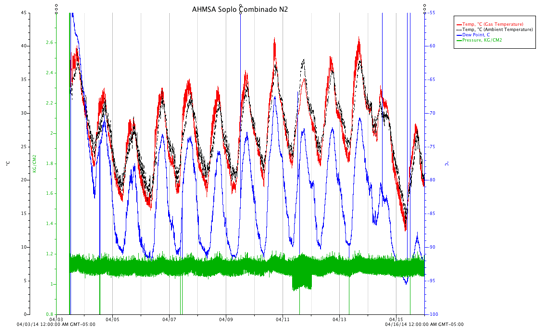
The graph of the full length of the report clearly shows the dew point trends with both ambient and gas temperature with little effect from pressure. This is counterintuitive because dew point does not vary with temperature, only pressure. The dew point fluctuations must be coming from the point of nitrogen generation.
5: Conclusions
It is obvious from the data
collected from April 3, 2014 through April 20, 2014 that the dew point
fluctuates with both ambient and gas temperature. What is not clearly visible
from this data is the reason for the fluctuation. Pressure dew point of a gas
does not change with a change in temperature, but changes with a change in
pressure. It would be interesting to see the dew point during the winter when
the ambient temperature drops below freezing. This report meets the
specifications set forth by the engineer for monitoring of the nitrogen booster
system.
6: Recommendations
It is the recommendation of the author that the same report be generated at the point of generation of the nitrogen. This should be completed at the entrance and the exit of the nitrogen generator to be able to pinpoint the reason for the fluctuation of the dew point of the nitrogen.

Figure 1

Figure 2
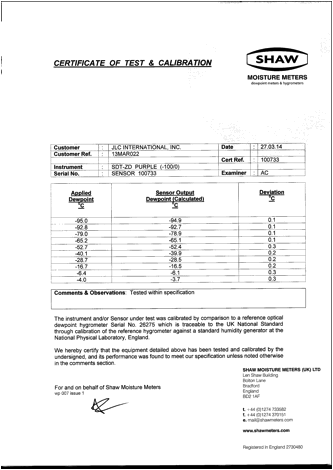
Figure 3
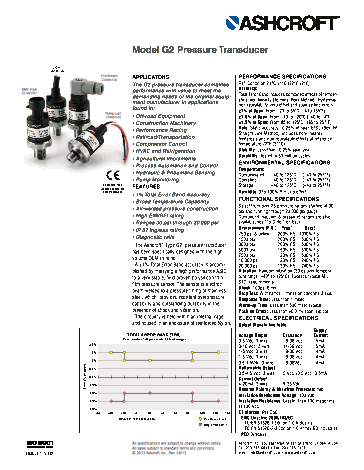
Figure 4
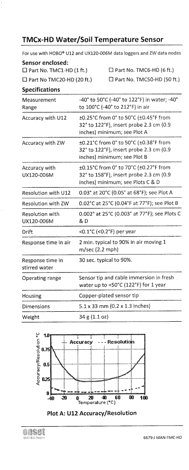
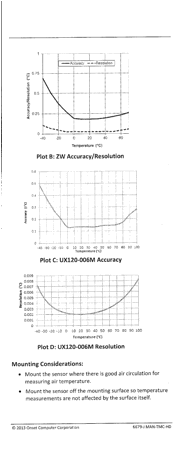
Figure 5
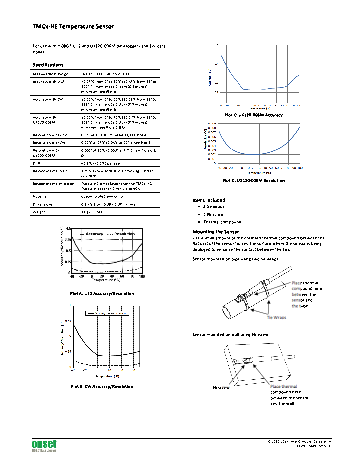
Figure 6